

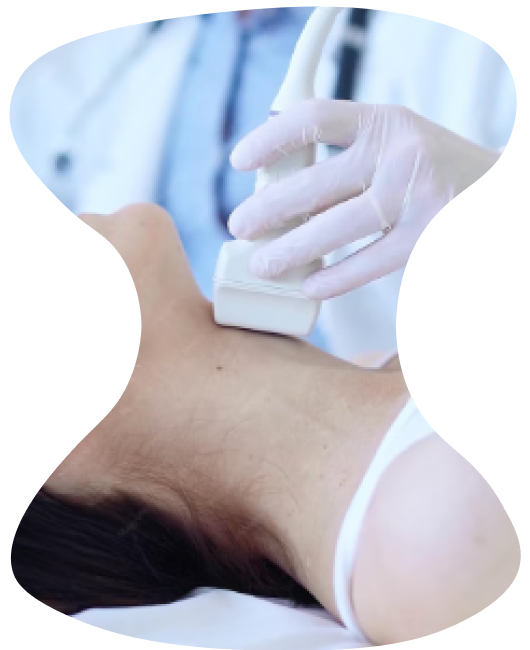
Our parathyroid glands sit just behind the thyroid, in the lower front of your neck. Two sit higher (the superior pair), two sit lower (the inferior pair). Each one is roughly the size of a grain of rice — usually around 3 to 6 millimetres.
Most people are born with four, but anatomy varies. Some people have three; a few have five or six. Glands can also sit in slightly unusual locations — behind the breastbone, inside the thyroid itself, or higher up near the jaw. This is one reason parathyroid surgery requires specialist expertise: knowing where to look matters as much as knowing what to look for
Each gland produces parathyroid hormone, or PTH for short. PTH has one main job: keeping the calcium in your blood within a tight, healthy range.
When your blood calcium drops too low, your parathyroid glands release more PTH. The hormone then works on three parts of your body:



Once calcium climbs back to normal, the glands ease off and stop pumping out PTH. This feedback loop runs every minute of every day — without you ever feeling a thing.
The whole system depends on you having enough vitamin D. Without it, even healthy glands struggle to keep calcium steady. That's why your endocrinologist will check vitamin D alongside calcium and PTH.
The names sound nearly identical, but the parathyroid and thyroid do completely different jobs.
The thyroid sits at the front of your neck and makes T3 and T4, the hormones that control your metabolism and energy. The parathyroid glands sit just behind the thyroid and make only PTH, which manages your calcium balance.
The simple difference:
A problem with one doesn't always mean a problem with the other. That said — thyroid surgery can affect the parathyroid glands because they sit so close together. A skilled endocrinologist or thyroid surgeon will identify and protect them during any neck operation.
Each parathyroid gland senses calcium levels independently and adjusts its PTH output as needed. When all four are healthy, they share the workload and keep your calcium steady through the day and night.
Things go wrong in two main ways:
Either way, blood calcium creeps higher than it should. Bones gradually lose density. Kidney stones become more likely. Muscles and nerves start to feel the strain.
The reassuring part: caught early, much of this damage reverses once the affected gland is treated.
Healthy parathyroid glands work silently — you feel nothing because your calcium stays stable. Trouble shows up when the glands swing in either direction:
Both conditions are diagnosed with a simple blood test for calcium and PTH together. The trick is knowing to order it — which is why parathyroid problems often go undiagnosed for years.
Parathyroid disorders are commonly missed because they sit in the shadow of more familiar thyroid problems. At Chennai Thyroid Clinic, parathyroid care isn't a side specialty — it's part of the core practice.

Dr. S. Ramkumar (MD, DM Endocrinology, AIIMS) has spent years recognising the subtle calcium and PTH patterns that point to parathyroid disease — including borderline cases other clinicians dismiss.

Dr. D. Priya leads our surgical team for cases that require operation, with [X] years of neck surgery experience and [Y] parathyroid procedures performed.

Our in-house lab supports precise calcium, PTH, and vitamin D testing, with results interpreted in clinical context — not in isolation.

Every patient receives a treatment plan built around their numbers, their symptoms, and their life — not a generic protocol.